Valentin spent time in Uganda as a long-term volunteer with SCI Switzerland. Here, he recounts his placement, during which he worked as a teacher at Alliance High School in Nansana after completing his vocational baccalaureate and before attending military training school. He describes his first impressions, the challenges he faced in the classroom, and his experiences with the local community. He also shares insights into his travels across Uganda and explains what he learnt about cultural diversity.
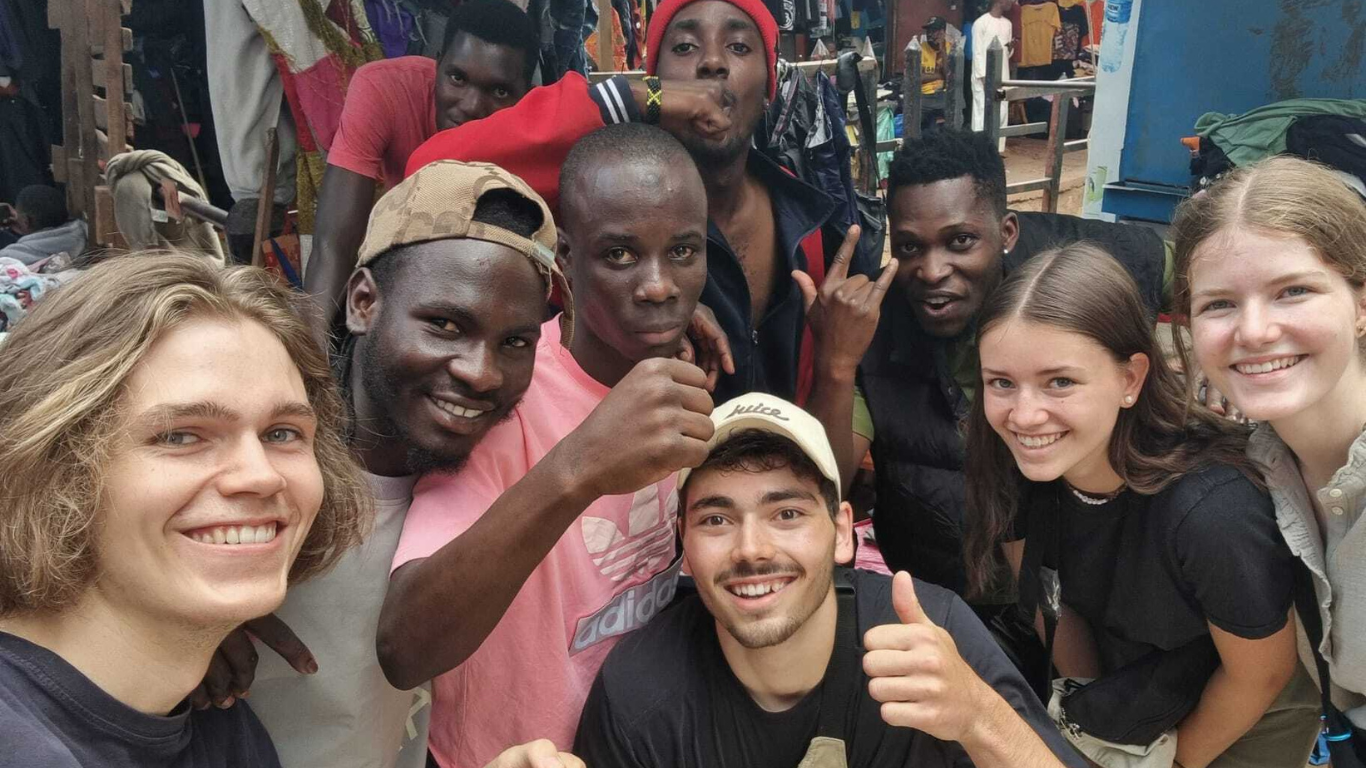
After completing my vocational baccalaureate, I was facing an uncertain future. With the idea of doing some voluntary work in mind, I searched online, found SCI, and four months later found myself on a plane to Entebbe, Uganda. A world I didn’t know awaited me. Although I knew a little about the country and my placement thanks to SCI’s preparation and my own research, I had never left Europe before. Consequently, I didn’t have many expectations; I just let things unfold, full of anticipation and a little nervous.
I don’t think I’ll ever forget the journey from the airport to my new home in Nansana. For the first time, the streets of the capital were already very busy at six in the morning. The direction of traffic also changed dynamically: because more people travel to Kampala for work in the morning than the other way round, the centre line is crossed and three of the four lanes are used for this direction. Traffic lights are often ignored, and turning requires a healthy dose of confidence and courage.
After a few introductory days with the local organisation “Uganda Pioneers Association” (UPA), I visited my project for the first time. I was to be working as a teacher at Alliance High School for the next two months. After a brief chat with the head teacher, my timetable was finalised: I was to teach four classes in Mathematics and Physics at Senior 1 and Senior 2 levels, corresponding to pupils aged 13 and 14. After spending half a week observing, I was fully integrated into the timetable and found myself standing alone in front of classes of 60 to 80 young people. It was a steep learning curve; I was impressed by the responsibility entrusted to me, wanted to fulfil it, and had many questions. Why, for example, do they place so much trust in a 19-year-old who has just finished his teacher training, has never worked as a teacher before, and whom they have never seen teach?
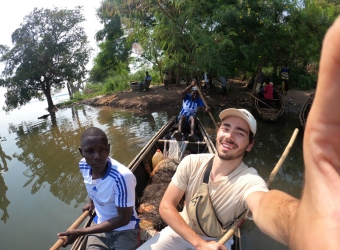


Outside of school, too, I wanted to learn as much as possible about the country and its people. During my very first week, I organised my first training session with the Makerere University handball team, and over the following weekends I played matches for them in the National Super League. Once the school year was over, I travelled north, where other volunteers from the organisation “EMOTER”’ showed me their project and what life is like in Nebbi.
Alongside the many memories, I also returned home with a strange feeling. I left Uganda after three months, whilst many people I had met would love to visit Europe one day. For them, however, obtaining a visa is anything but easy. A 19-year-old from Uganda would certainly not have the privilege of being allowed to work in a Swiss school for two months. One Swiss franc is worth about 4,000 Ugandan shillings, which made me a millionaire of sorts in Uganda. It symbolises the change in social status I experienced during my placement.
The report is, of course, far from complete – anyone who has experienced something similar themselves can imagine how much happened between the lines. For me, it was an incredible experience!
Are you also interested in a long-term volunteering placement? If so, please get in touch with us.
Valentin’s placement was partly funded by our scholarship programme for young people currently in or recently completed vocational training. SCI Switzerland uses this programme to award scholarships to apprentices and those who have recently completed their apprenticeships. Thanks to this, the programme costs and travel expenses are covered for young apprentices and those who have recently completed their apprenticeships.