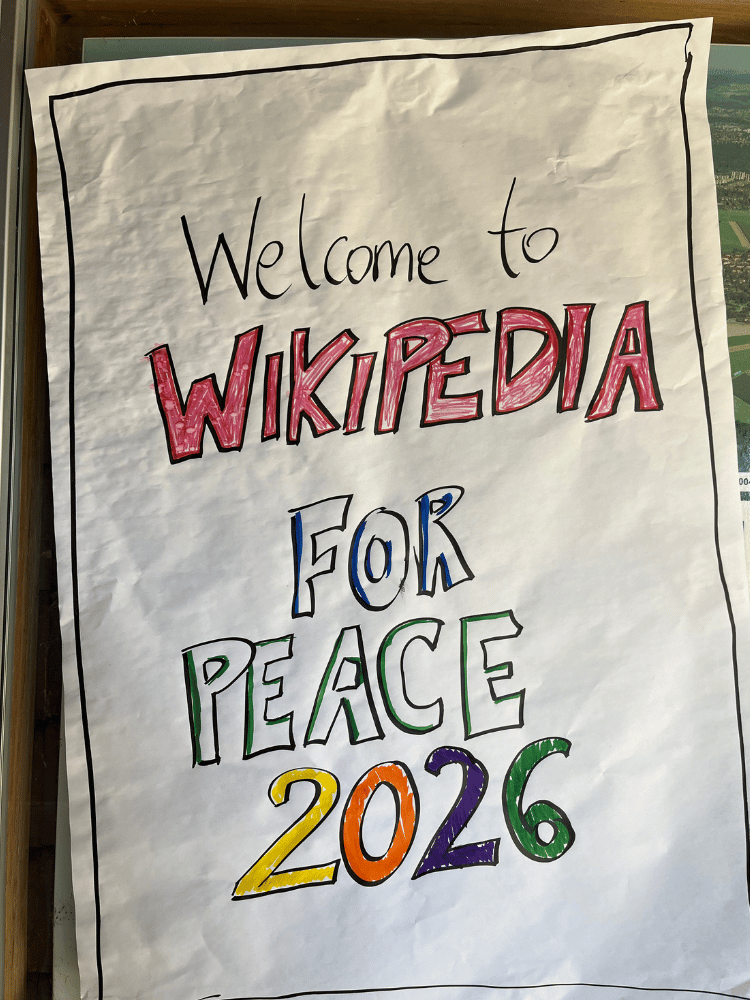
From 2nd to 9th October, Erika participated in the international ‚Wikipedia for Peace 2026: Remembering Genocide‘ training course in Bern. The course brought together young people from Namibia, Poland, Palestine and Switzerland. Here, Erika shares her insights, explaining how the training changed her perspective on genocide, and describing how care and understanding shaped the week.
I was one of the participants of this years Wikipedia 4 Peace training. Wikipedia for Peace is a long-term project aimed at contributing more and better peace-related content to Wikipedia. This was a truly live chainging experience. I already knew it would be a valuable experience and an opportunity to learn a lot, but I never imagined it would affect me so deeply on an emotional level.
Transformative encounters
There were around thirty of us, each with a different background, different experiences and a different story to tell. Our goal was to use Wikipedia to bring attention to the crime of genocide, both past and present, and to the people whose lives are affected by it: victims, bystanders, journalists, activitsts. During that week, we created 66 articles. However, looking back, I realise that this was probably the least important result of the whole experience. Because what really made a difference to me was everything that happened beyond the articles we wrote.
Among the participants was M., a young man who survived the genocide in Gaza. He has even written a book about his experience, telling the story of how the genocide turned his life upside down, taking away everything he had worked so hard for and most of the people he loved. I still find it difficult to put into words what happened in that room as he shared his story with us. I remember feeling overwhelmed, unable to find the right words. When faced with so much cruelty and violence, all I could feel was anger and sadness. Sometimes, words simply do not seem enough to express what you feel.

Learning about genocide
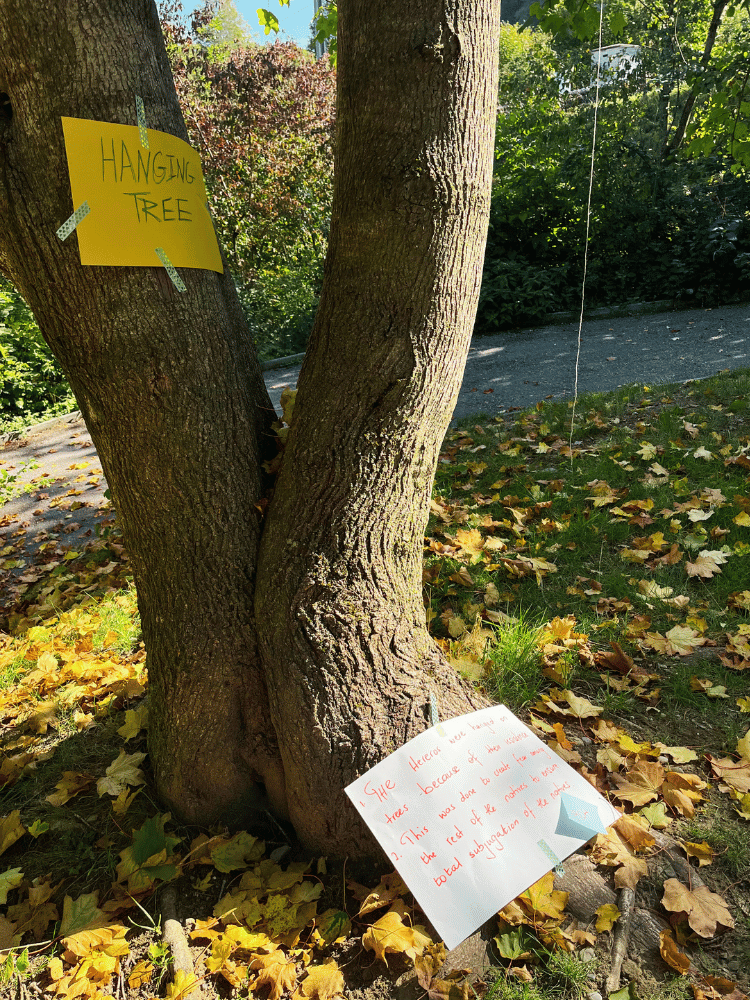
We also had a group of participants from Namibia, who told us how German forces had taken everything away from their people: their homes, their land and even their identity. They invited us to take part in their sacred fire ceremony, which represents a direct connection between the living and their ancestors. As we gathered around the fire, they shared the story of how their people had been decimated and how long they had to wait for Germany to acknowledge the crimes committed against them.
There is one thing I will never forget that R. said after an activity:
Finally, I feel seen, heard and understood.”
Those words really stayed with me, because I think they capture one of the most important things we achieved during that week.
It was not just about raising awareness or writing articles; it was also about giving people the chance to tell their stories and, most importantly, to feel that someone was truly listening.
A «safer» space full of care and mutual understanding
Our facilitators managed to create a space where everyone felt free to express their pain, speak openly, cry and let out all those emotions that are so often kept inside. It was a place where people could be vulnerable without being afraid of being judged.
But our time together was not only about pain and difficult stories. We also laughed so much, danced, sang, played cards and explored the city together. And somehow, day after day, we grew closer and closer. It was beautiful to see how a group of people who had come together with different experiences and stories gradually became so connected.
Looking back, I feel that every single activity had a purpose. Everything was carefully planned to give each of us the chance to share our story, get to know one another, exchange perspectives and reflect together. It was an experience that taught me so much, not only about history and genocide, but also about people, listening and the importance of making others feel seen and understood.
Thank you, Bogumila, Thomas and Shams, for making all of this possible. And thank you to everyone who shared this experience with me. You have all become part of something I will carry with me and keep you close to my heart.
Are you interested in training courses like these? We run several workshops in Switzerland on topical subjects every year. The next ‘Wikipedia 4 Peace’ is planned for autumn 2027!