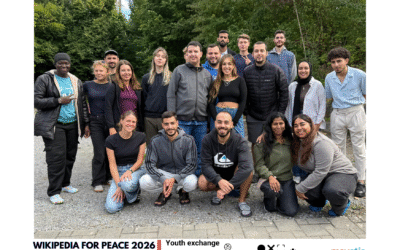
In this article, one of the trainers reflects on QUTIE 2.0, a week-long Training for Trainers organised by Critical Queer Solidarity (CQS) in partnership with SCI Switzerland. The training brought together participants from across Europe and beyond to explore drag, intersectionality, colonialism and queer solidarity. Here, the trainer Jara shares impressions and highlights from an inspiring week.

Scenes of goodbye are emotional on a sunny April day. The 22 participants have just finished QUTIE 2.0, a week-long training. “QUTIE for me was just more than a workshop, it was celebration of Trans joy and queer love,” one participant says.
Building an International Queer Learning Space
From April 21st to 28th, participants from six partner organizations and many different countries – Armenia, Serbia, Greece, Germany, Poland, Morocco, Belarus, Palestine, India, and more – came together outside of Bern to spend a week connecting and learning together in a queer space. As the name suggests, QUTIE 2.0 is the second edition of the training for trainers by CQS in partnership with SCI, examining a range of topics spanning drag, the construction of gender through colonial forces, and intersectional solidarity.
Exploring Colonialism, Gender and Intersectionality
Guided by trainers Hassandra and Jara from CQS, participants learned about theoretical frameworks connected heteronormativity – the societal expectation of heterosexuality and cis-ness – to the history of British and French colonialism in the Global South and reflected on their own experiences of intersectional oppression, particularly the connection of racism and homophobia. The participants read and discussed the text “Are You a Pan-Arab Nationalist or Just a Man Who Sleeps with Men?” by Adam HajYahya, which dives into the framing of Palestinian men as dangers to British colonialism through their queerness in the 1930. The conversation teased out the shift between queerness framed as a state-threatening activity during colonial times to the pinkwashing narratives of the present.


Embodying Learning Through Movement
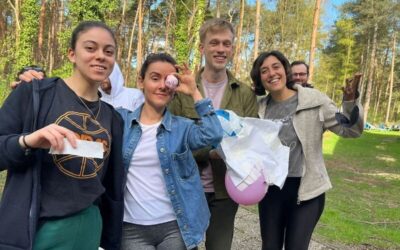
After activating the mind, it was time to activate the body: afternoon sessions were dedicated to movement and theater. In a leap of trust into the sometimes peculiar methods of theater work, the participants practiced exercises aimed at raising awareness for their bodies and the space they live in. Hassandra lead through meditations of the body, asking participants to shake and stretch and move in ways many people rarely, if ever, do. Jara focused on the voice through somatic exercise. The sessions challenged and guided participants to reclaim space and thus agency against embodied experiences of oppression. The group moved as one unit through the collective exercises, observing and mirroring each other’s movements, exaggerating quirks and exploring movement within the safer space of the seminar.
“In this cisheteronormative world, where Queer spaces are already getting encroached, QUTIE 2.0 provided a safe space allowing us to embody Queerness in our everydayness”, another participant said.
The Power of Drag
The highlight, most participants emphatically agreed, was the drag session where they played with drag makeup and movement. For some, it was the first experience of slipping into new faces and characters and stepping into the space of creation and freedom drag provides – “the switch of liberation” as one participant said, where queer bodies can be exactly what they want to be.
Whenever challenges arose, care person Danai was ready to provide a listening ear, a compassionate voice and a comforting hug. The entire experience was perfected by kitchen fairies Dana and Maciek, who cooked up a storm of vegetable-laden vegan deliciousness.
Looking Ahead
“QUTIE 2.0 strengthened my sense of belonging to the queer community. It showed me how we can feel empowered by celebrating queer joy and how we can use this force to challenge predominant power structures of racism and discrimination.” Let us hope for many more to come!
***
Good to know: Queer young people experience multiple crises at once these days: While queerness is more visible in society, queerphobia is alive and thriving in many forms. Especially marginalized queer young people are affected, e.g. queer youth with disabilities, queer youth in (semi-)authoritarian states, queer refugees and migrants and queer BIPOC youth.
This is why SCI Switzerland started this education journey in 2024.