New prices – more transparency and solidarity
We are adjusting our prices to make them more consistent, comprehensible and transparent. At the same time, we have to increase our programme prices because our own costs have increased – a step that is necessary to ensure the long-term quality of our programs. Despite these adjustments, our prices remain deliberately low and significantly lower than similar programs.
Our solidarity-based approach remains central: participation should not depend on income. That is why we are sticking to solidarity-based prices and creating scope for people with different financial means to participate together. Those who can pay more indirectly support others for whom the regular price would be a barrier.
A special offer continues to be accessible to people with a refugee background: as part of our Create a Common Understanding (CACU) programme, we offer free participation in our camps. This is only possible because committed donors consciously support this form of participation.
Our membership fees are also evolving: there is now the option to support us as a sympathiser with a small contribution, to join as a member with a regular amount, or to take on additional responsibility for our joint commitment with a higher, solidarity-based contribution. This allows people to choose how they would like to contribute financially, depending on their life situation and resources.
New language – same commitment
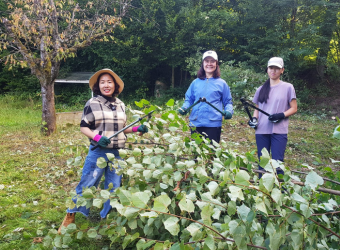
In addition to structural adjustments, we are also revising our language. The term ‘work camp’ no longer describes what our programs actually are today: the term is strongly work-centred, can be misleading and is difficult to understand in many languages. That is why, in the international SCI context, we now refer to volunteer camps when we refer to our short-term programs. The new term is clearer, more inclusive and closer to the actual experience of the participants. It focuses on what really matters: committed people who come together voluntarily, learn from each other and build something together in one place – for themselves, for others and for the community.
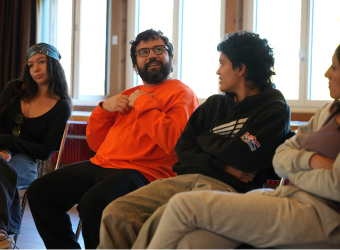
Our previous ‘mini work camps’ are also getting a new name. These programs serve to help us get to know our world better together and are characterised by a diverse group of participants, including people with a refugee background. This diversity is not an accessory, but a central component of the format. In future, these programs will be called intercultural Weekends – a name that describes what actually happens there: intercultural exchange on an equal footing, combined with space for encounter, dialogue and reflection.
2026: International Year of Volunteering
We are not only focusing on our own changes, but also on the bigger picture: 2026 is the International Volunteer Year. This year offers an opportunity to make voluntary engagement more visible, acknowledge its importance and take it more seriously in political terms. Volunteering is not automatic; it requires structures, acknowledgement and spaces where people can contribute safely and effectively.
We are already preparing exciting projects for 2026, and numerous activities are also planned within the international SCI network. The aim is not only to celebrate volunteering, but also to raise public awareness of its impact and its political, social and cultural dimensions.
Why these changes now?
These changes are not New Year’s marketing or a short-term image campaign. They are based on concrete experiences from recent years, feedback from participants, partner organisations and volunteers, and careful evaluations of our work. Behind them is a clear aspiration: transparent communication, structures based on solidarity and realistic framework conditions that are sustainable in the long term.
All of this is based on the conviction that volunteering is a powerful tool for social change – both locally and internationally. With the changes we have now initiated, we want to not only celebrate 2026 as a symbolic year of volunteering, but also actively shape it together with many people. Are you in?