Global Education Labs
The Global Education Lab Series organised by SCI Switzerland began in 2024.
What is the project-series about?
Global Education Lab is a series of annually recurring skillshares for educators working on global justice, neocolonialism and global supply chains.
The series brings together educators, youth workers and activists from different regions to exchange knowledge, develop educational methods and build solidarity on urgent global issues. Its long-term aim is to create a global network of practitioners and a shared pool of high-quality educational tools adaptable to local contexts.
How it works
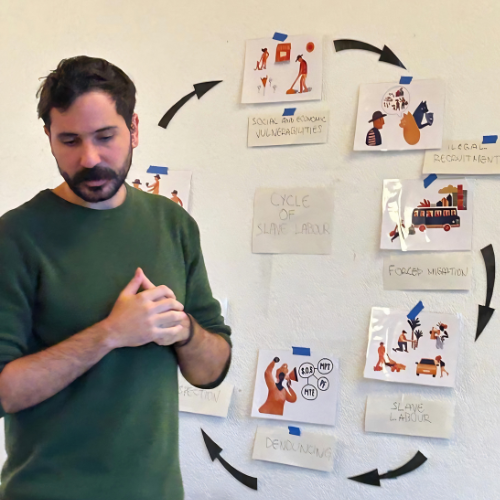
Global education is an approach to learning that helps participants understand global systems, cultures and power relations in an interconnected world. It focuses on issues like social justice, human rights, environmental sustainability and economic interdependence.
All skillshare sessions facilitate conversation and build shared understanding of how to deliver global education on specific topics in youth work and educational settings. The goal is to equip participants to act responsibly and critically as part of a global society. It emphasizes critical thinking, multiple perspectives and collaborative problem-solving across borders.
Who is involved?
The project was implemented through an international network of organisations working on global education, peacebuilding and social justice, including VOLUNTARY WORKCAMPS ASSOCIATION OF NIGERIA (VWAN), Service Civil International Sri Lanka, Service Civil International Hong Kong, Zimbabwe Workcamps Association, SCI India, Konzeptwerk Neue Ökonomie e.V., Society for Peace and Sustainable Development (SPSD) and Repórter Brasil.
Individual contributors support the project through expertise, facilitation and networking.
Our trainers:
Sara (she/her) is a trainer and peace activist who has been involved with SCI Switzerland for several years. She has organised various trainings and seminars and has facilitated sessions on Gender, Global Justice and and antimilitarism. Sara holds a Masters Degree in Gender, Globalisation and Human Rights and her main focus at the moment is working around masculinities.
Thomas (he/they) is a political educator living in Berlin. He is active in SCI since 2011 and has organised and coordinated many volunteering projects, trainings, seminars and youth exchanges since then, often focusing on anti-discrimination, global justice and antimilitarism. Thomas is co-founder of the collectives Critical Queer Solidarity (Berlin) and Education for Utopian Change (Leipzig).
Project results (ongoing)
- The Global Education Lab series produces concrete educational outputs and long-term collaboration between practitioners working on global education.
- The project so far resulted in around 40 empowered participants, who engaged in non-formal education methods, discussions, and collaborative creation of educational tools. They back home continued to organise educational activities for youngsters and other groups.
- The skillshares also resulted in social media content and short videos to raise awareness among young people. Follow-up activities such as local workshops are encouraged to ensure long-term impact beyond the training itself.
Why such a project?
Lack of awareness about colonial history, global supply chains and forced labour – Switzerland, the European Union and the Global North play a fundamental role in today’s global market
We need stronger critical and decolonial education approaches, demand for practical tools for educators and youth workers- to better connect Global North and South perspectives
It is relevant to bring awareness to European citizens around often invisble topics and to encourage them to demand a systemic change from their governments
Overview of our Global Education Labs
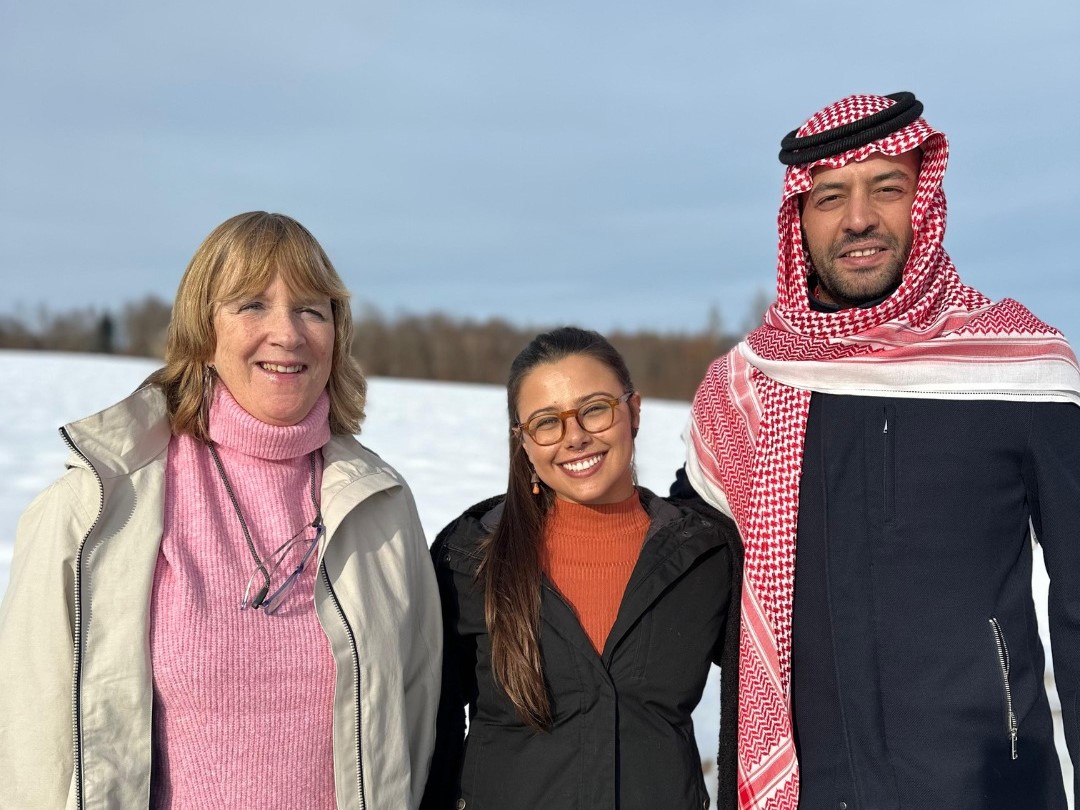
#1 Extractivism
19-26 November 2024
This seminar focused on extractivism and its global impacts. The training followed a structured learning approach including understanding realities, exploring resistance, analysing reforms and imagining alternative systems. Participants collaborated on toolkits and practical resources for educators to use in workshops.
The training emphasized linking global systems to local realities and making power structures visible.
Read the evaluation report online!
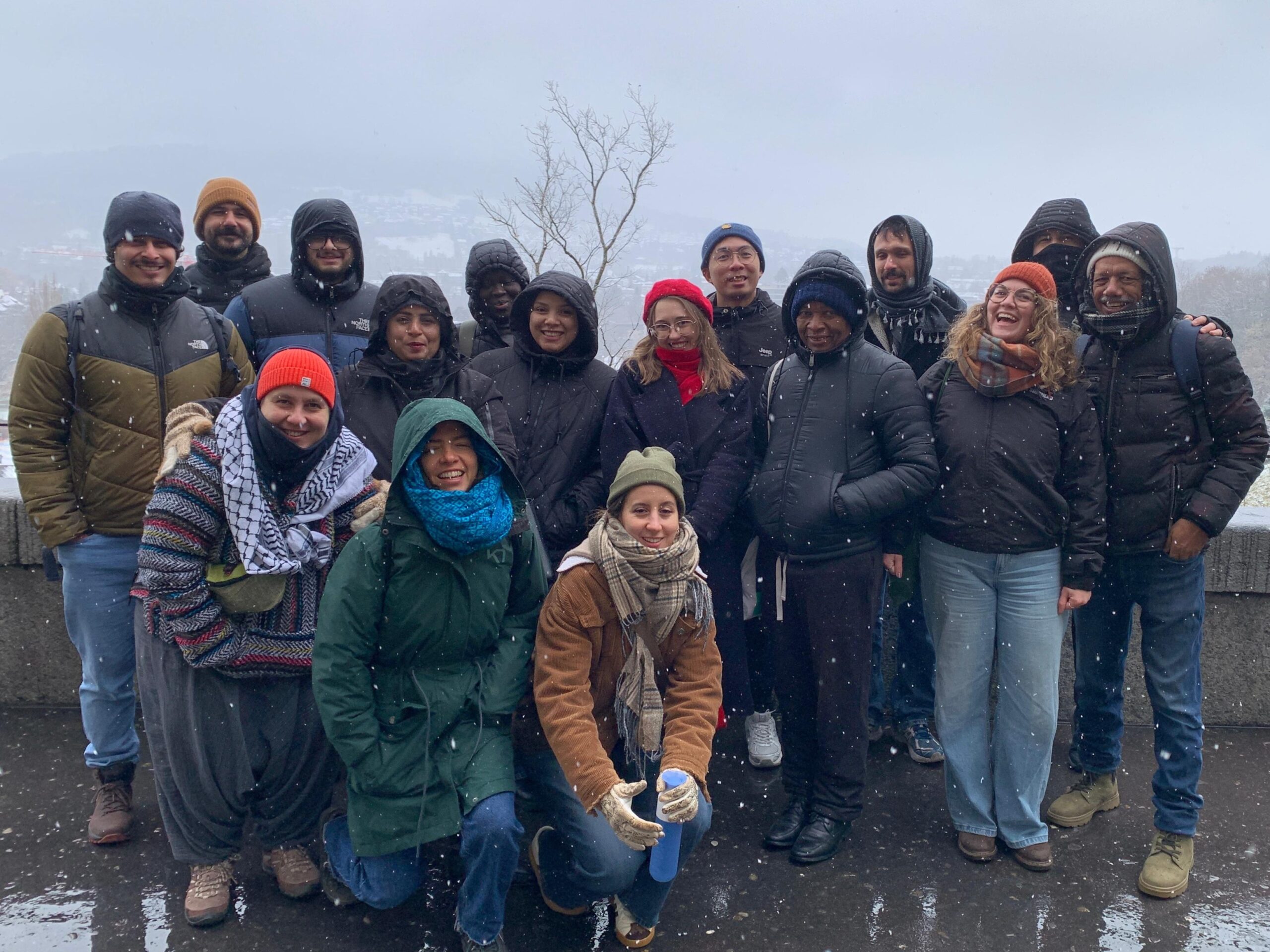
#2 Forced Labor
18-25 November 2025
This skillshare focused on forced labor and its global impacts. It also shed light at what is being done to protest and resist this phenomenon around the world and talk about human rights defenders. There was room to discuss how promoting alternative economic models can help abolish modern slavery. The week resulted in the development and sharing of educational methods that can help us do workshops on this topic.
Read the impact report online!
#3 Care & Indigeneity
03. – 10. November 2026 in Bern
The current call for participants for the 3rd. global education lab can be found online – registrations are open.
Global education expands not just knowledge, but perspective. Learning without borders opens the door to a shared future.
Voices of participants
«Thank yo so much for this experience, i learnt a lot, I can use for my daily work»
«This was a truly unique experience, full of learning, sharing and creating»
Follow-up actions
The participants were inspired and challenged to put their new knowledge and skills into practice in their home country.
Below you find a selection of the training-results.
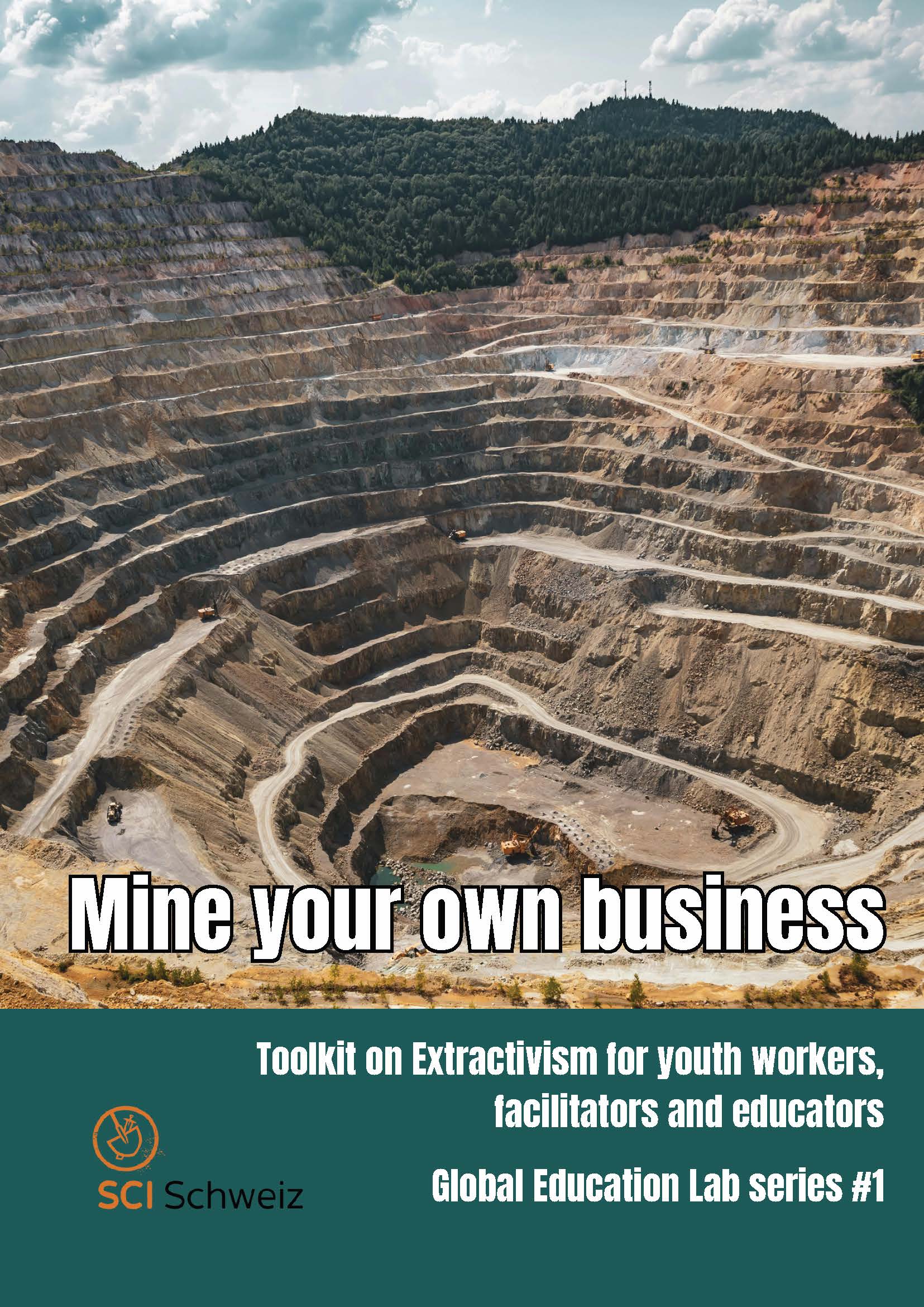
Toolkit – Extractivism, an educational tool for young people
One of the tangible outcomes was this educational toolkit for young people, developed by the participants of Global Education Lab #1: Extractivism in Bern. his toolkit helps educators, youth workers and advocates in raising awareness around the concept of extractivism among young people in a way that is simple, relatable, and actionable. As extractivism has harmful effects on
the environment, communities, and future generations globally, it is crucial for youth to understand the topic and to take informed action. The toolkit provides knowledge, activities, and resources to inspire young people to reflect on these challenges and to become part of the solution.
Social Media Campaign on forced labour
As part of the video series the participants of Global Education Lab 2 created some social media contend around forced labour.
Here is an interview with Fatou, a survivor of human trafficking and activist, sharing part of her story and the reality of millions of people who are still suffering and being abused under inhumane conditions.
Please be aware – the video contents mentions of abuse and human trafficking.
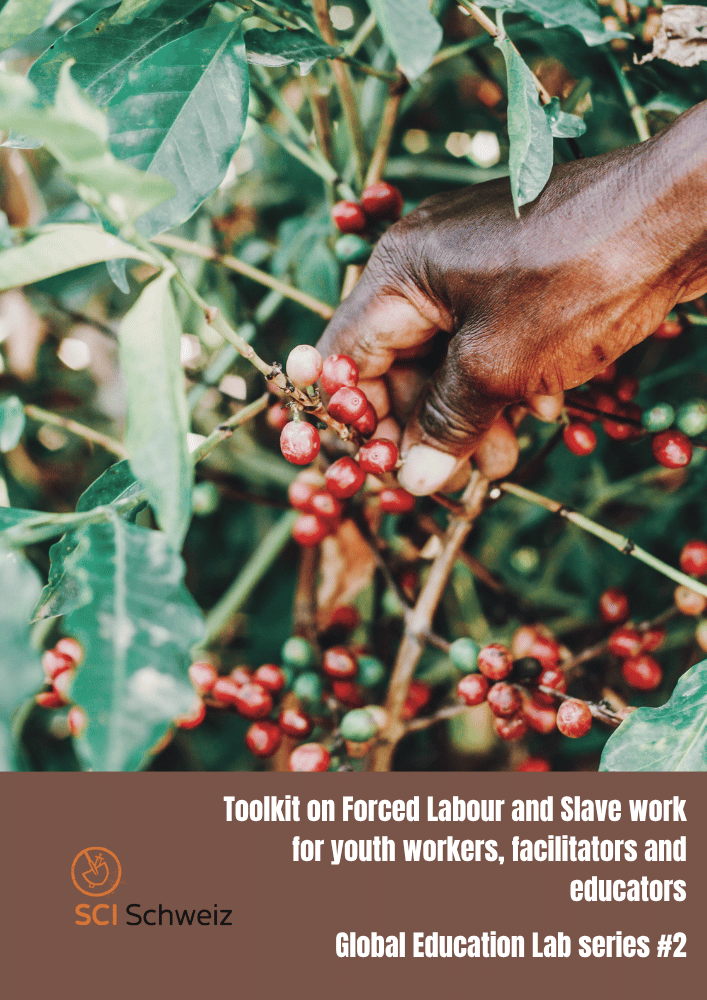
Toolkit – Extractivism, an educational tool for young people
This educational toolkit for young people was developed by the participants of Global Education Lab #2: Forced Labour in Bern, Switzerland in 2025. This toolkit was created to help educators, youth workers and advocates in raising awareness around the concept of forced labour among young people in a way that is simple, relatable, and actionable.
As forced labour pushes 27.6 million people into work they cannot refuse – across agriculture, construction, domestic labour, fashion, and
sexual exploitation – often through trafficking or extreme control, young people must engage critically with the issue and contribute to collective
efforts to end it.
Still have questions?
If you are interested in the project activities and would like to get in touch, write to us at info@scich.org
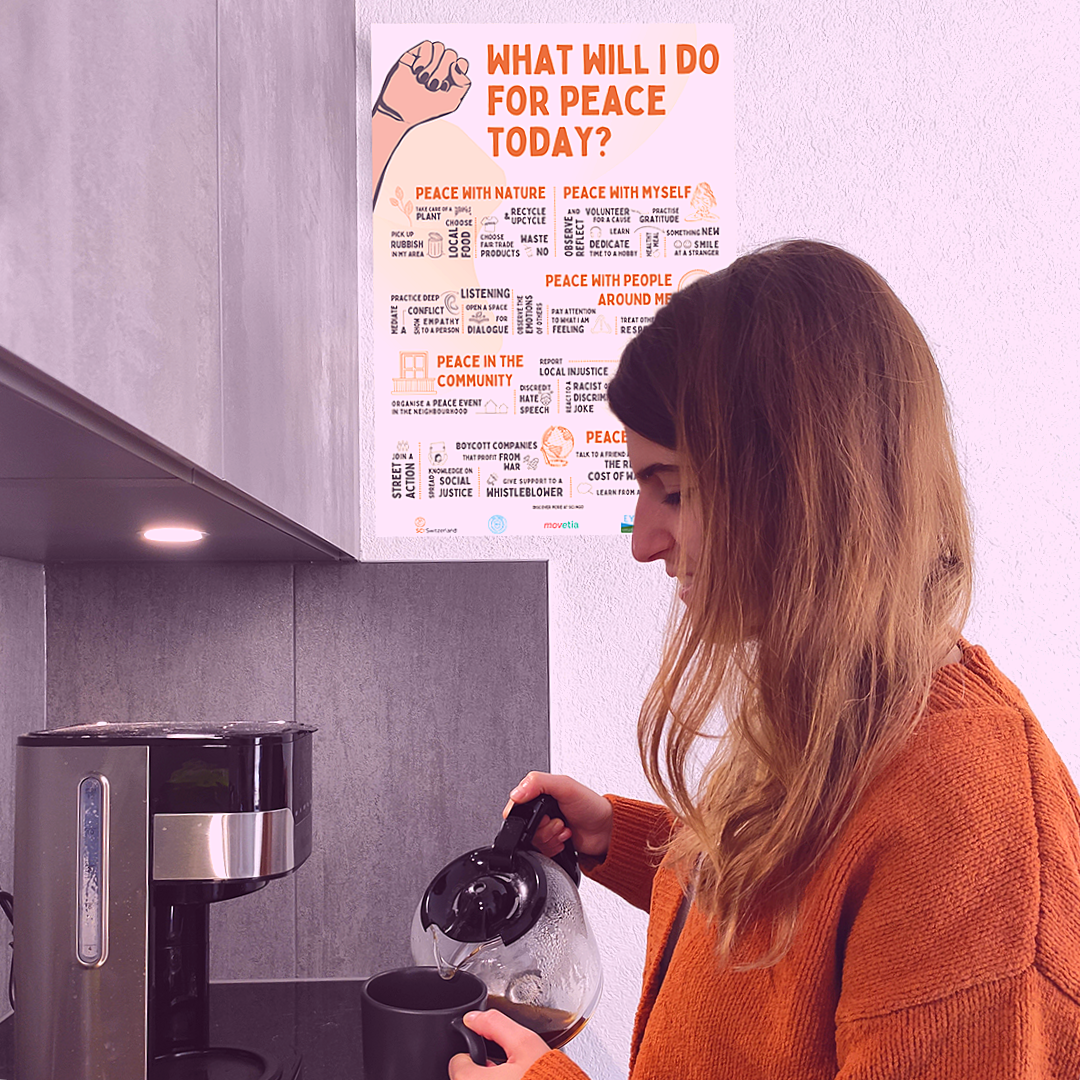

This project is financially supported by Movetia. Movetia promotes exchange, mobility and cooperation within the fields of education, training and youth work – in Switzerland, Europe and worldwide.